Personal and environmental audio – hear hear!

Just before Christmas, a friend brought me a new pair of headphones back from the US. I still haven’t quite decided yet whether they are the future of personal audio or just a step in the right direction, but I am finding them a bit of a revelation.

The headphones are the AfterShokz Sportz M2, which are relatively cheap, bone conduction headphones. Bone conduction means that instead of the headphones sending sound into your ear canal (like in-ear or full size headphones), they sit against the bones of your skull and send vibrations along them to your inner ear. The main advantage is that while listening to audio from these headphones, you can still hear all the environmental sound around you. The main disadvantage is that, of course, you can still hear all the environmental sound around you.

Clearly, this is not desirable for an audiophile. Obviously, you don’t get these sorts of headphones for their audio quality, and while I find them perfectly decent for listening to music or podcasts, the bass is not as good as typical headphones either. That said, if I want to hear the sound better, I can pop a finger in my ear to block out external noise. Sometimes I use the headphones for telephone calls on my mobile when traveling on the tram, and it probably looks a little odd to the other travelers that I am wearing headphones and putting my finger to my ear, but it is very effective.

For the first week or so that I was wearing them, I had strange sensations in my head, very much like when I first get new frames for my glasses. They push on my head in a way that I’m not used to, and it takes a little bit to get used to. The fact that I can hear music playing in my “ears” and yet hear everything around me was also initially a bit surreal – a bit like I was in a movie with a soundtrack – but the strangeness here diminished very quickly and now it is just a delight.

While they are marketed to cyclists or people who need to be able to hear environmental sound for safety reason (like, well, pedestrians crossing roads, so almost everyone I guess), it’s not the safety angle that really enthuses me. I am delighted by being able to fully participate in the world around me while concurrently having access to digital audio. When the announcer at a train station explains that a train is going to be cancelled, I still hear it. When a barista calls out that my coffee is ready, I still hear it. When my wife asks me a question while I’m doing something on the computer, I still hear it.

A couple of years ago, I yearned for this sort of experience:

For example, if I want to watch a TV program on my laptop, while my wife watches some video on the iPod on the couch next to me, we are going to interfere with each other, making it difficult for either of us to listen to our shows.

Being able to engage with people in my physical environment and yet access audio content without interfering with others is very liberating. I had hoped that highly directional speakers were the solution, but bone conduction headphones are a possible alternative.

Initially I had tried headphones that sat in only one ear, leaving the other one free. They were also very light and comfortable. One issue was that these were Bluetooth headphones and had trouble staying paired with several of the devices I had. However, and more importantly, I looked a bit like a real estate agent when I wore them, and was extremely self-conscious. Even trying to go overboard and wear them constantly for a month wasn’t enough to rid me of the sense of embarrassment I felt. Additionally, others would make a similar association and always seemed to assume that I must be on a phone call. If I did interact with others, I always had to explain first that I wasn’t on a call. What should’ve been a highly convenient solution turned out to be quite inconvenient.

The AfterShokz have none of these issues. I did try coupling them with a Bluetooth adaptor, but it had similar Bluetooth pairing issues. I see that AfterShokz have since released headphones with Bluetooth built in, but I haven’t tested these.

One potential new issue with the AfterShokz that I should discuss relates to the ability for others to hear what I’m listening to – this had been mentioned by some other online reviewers. While at higher volumes, others can hear sounds coming from the headphones (although this is not unique to AfterShokz’ headphones), at lower volumes it is actually very private. In any case, I’ve got a niggling sense of a higher risk of damage to my inner ear from listening to music at higher volumes: bone conduction headphones surely need to send sound-waves at higher energy levels than normal headphones because the signal probably attenuates more through bone than through air, and this is coupled with the fact that it needs to be operated at higher levels in order to be heard over background noise that would be otherwise blocked out by normal headphones. So, I try to set it at as low a volume as I can get away with, and block my ear with my finger if I need to hear better. In quiet environments, it’s not an issue.

Perhaps I am worrying about something that isn’t a problem, since I note that some medical professionals who specialise in hearing loss are advocating them. For that matter, the local group that specialises in vision loss is also promoting them. Although, I guess the long term effects of this technology are still unclear.

In any case, I find using this technology to be quite wonderful. I feel that I’ve finally found stereo headphones that aren’t anti-social. I hope if you have the chance to try it, you will also agree.


Windows 8 – worth the w8?

Our old laptop entered its death spiral a few months ago, but instead of replacing it immediately, we borrowed a stand-in laptop from a kind friend and decided to wait for the slew of Windows 8 compatible laptops that we expected to come in November. Not only would waiting mean that the machines available then be more “future proof”, and cheaper due to competition from other Windows 8 laptops, but we’d be able to pick up (I hoped) a decently-priced touch screen laptop.

Having had the iPad for a couple of years now, and experienced using it with a Bluetooth keyboard, I was completely sold on the idea of a keyboard-enabled device with a touch-screen. The combination of decent keyboard to type with and pleasant touch-based interface is a winner. It also doesn’t hurt that you double the screen real estate by moving from a soft keyboard to a hard keyboard.

So, November came, I put the plan into action, and bought a Sony VAIO E-Series touch laptop for a little over $1,000. It runs a standard Intel i5 processor and comes with a 750 GB hard disk drive. And of course, it had Windows 8.

This post is about sharing my thoughts on Windows 8, having used it now for almost two months. Initially, I was pretty excited with it, but I have since discovered some limitations, so I feel I have a reasonably balanced view of it now.

Major Changes

There are two really big changes that I’ve encountered, coming from Windows 7 up to Windows 8. Many of the other changes stem from these. The changes I’m referring to are: (i) you can now touch the screen to do things, and (ii) the Start Menu has become a Start Screen.

Realistically, Microsoft could’ve introduced native touch screen support in earlier versions of Windows. For example, HP has had this capability on their TouchSmart series of machines. However, it’s not enough for the operating system to be designed around touch if none of the applications are, since controls designed for mouse-based interaction are typically too small to easily manipulate using fingers. So, to introduce touch required Microsoft to push their entire developer community to redesign their applications, and this is logically done together with a major new operating system release.

This may have also spurred Microsoft to redesign their Start Menu. A feature of Windows since Windows 95, it was really a bit too compact for touch and required multiple clicks to navigate which becomes annoying with touch. They could’ve just made the Start Menu bigger and supported scrolling rather than clicking, but instead they took the pretty risky decision to replace the menu with an entirely new screen with a different user interface and its very own app store. Perhaps this understates the level of change. It’s almost as if they decided to replace the humble Start Menu with the entirety of Windows Phone 7.

The Touch Experience

I really love being able to touch the screen. Yesterday I used another laptop without touch, and kept having to pull myself back from touching its screen. It’s not that I use touch at every opportunity: it’s just one way I interact with the interface, along with the keyboard, trackpad and mouse. Some things are best done with a mouse, sometimes the keyboard is best, and some of the time touch is best. This is why I know that eventually touch-screen laptops will become common as those with trackpads.

Windows 8 enables this, but it’s not 100% there yet. Let me tell you about some of the gaps.

When you use touch to control the interface, the mouse pointer disappears. However, since the mouse pointer also used to indicate that the operating system is doing something (a little circular animation appears on it, although in previous versions of Windows it was a sand-timer), having the pointer disappear also leaves me in the dark as to whether that icon I just touched is really launching the program I wanted or whether I was a few pixels out and should really touch it again. Unsurprisingly, sometimes I launch things multiple times. This can get annoying.

It’s not just when launching programs, but any time I try to take an action where there may be a delay. Normally applications rely on the mouse pointer to communicate activity back to the users, so they don’t provide any other indication that things are happening (web browsers are a significant exception). Such applications will need to be rewritten to have an application specific activity indication. Or Microsoft will need to fix this, perhaps in Windows 9.

This tells me that the touch experience was not foremost in the mind of the designers of Window 8. On the contrary, it seems more to be designed around a “keyboard first” principle. Power users are given a range of handy key combinations, and it appears that some of these have been turned into useful gestures, but the whole touch thing isn’t totally elegant.

I find one of the handiest key combinations to be alt-tab, allowing me to quickly switch between applications/windows without having to use the mouse. As this is so useful, this has been converted to a touch gesture: place finger on the left-side bevel outside the screen, swipe to the right onto the screen, then without lifting your finger swipe back to the left. As well as being a clumsy gesture, it doesn’t actually list all the applications since all desktop applications are grouped together.

Another thing is the on-screen “Touch Keyboard”. Despite it being completely unnecessary because this machine is a laptop, ie. it has a keyboard, the Touch Keyboard keeps popping up. It slides up onto the screen when I am logging in, when I’m using Google Chrome, and at other random times. As soon as I touch a key on the real keyboard, the on-screen Touch Keyboard slides away, but I can’t prevent it appearing in the first place. Unchecking the Touch Keyboard Toolbar in the Task Bar properties is a temporary fix, but this resets after rebooting.

Apps and the Start Screen

Despite the Start Screen having the old Start Menu as its heritage, there are two types of application you can start from the Start Screen: (i) Windows desktop applications that we’re all familiar with, and (ii) “apps”. These apps can appear as “live tiles” on the start screen (showing a snippet of content from the full application), a full-screen application with a new touch-centric user interface, or a version of that full-screen application but adapted to fit just a fraction of the screen to allow multiple apps to be on the screen at the same time (not every app necessarily supports this though).  These two types of application live in different worlds.

To get new apps, most users will need to use the Windows Store app to discover and download them. Using the Windows Store is like using Apple iTunes or Google Play, and a Windows Live account needs to be set up with Microsoft before you can download anything, even free apps. This was a pain, since I’d set up one of the computer accounts as a local account for our 4 year old and I didn’t want to set up a Windows Live account for them. Another aspect to apps is that they are associated only with one user. Desktop applications can be installed system-wide for anyone to use, but not these apps. So, it also meant that I couldn’t install apps from the Windows Store under my log-in for my 4 year old to use.

This is not a problem on our iPad, where there is no concept of multiple accounts, so I can easily download apps from the Apple App Store and then my 4 year old can get to them. I guess she’s just going to have to stick to desktop applications for now.

There are a range of built-in apps that are available from the Start Screen, eg. Photos, Music, Video. These are similar to Windows Photo Viewer or Windows Media Player, except they are much simpler and have fewer features, so you might be inclined to just ignore them. Unfortunately, they are the default applications assigned to a large variety of file types. I’ve had to go into the Control Panel and change the defaults back to what they’ve been in previous versions of Windows so that I can actually get things done.

I have downloaded a few useful apps from the Windows Store, such as Skype, a couple of games, and a good internet banking app. However, there are strange omissions, such as no official Facebook or Twitter apps, no iView app, and no YouTube app. Given that Microsoft released their operating systems to developers a long time before they made the final version public for sale, it tells me that it wasn’t for lack of opportunity: these major developers have had absolutely no interest in making their services available as apps on Windows 8.

Developers have generally been pretty slow at updating their desktop applications for Windows 8, also. For example, iTunes 11 was the first version of iTunes that officially supported Windows 8 and it came out well after the public version had shipped (let alone when the original developer versions of Windows 8 were available). Google’s Picasa still doesn’t officially support Windows 8.

Concluding Remarks

Windows 8 is a big change from Windows 7, and users are going to go through a learning curve. However, the rapid uptake of Apple iPads by Windows users has shown that they’re quite happy to learn a completely different interface if there’s enough value in it.

For me, the experience of doing tasks on a Windows 8 touch-screen laptop is better than doing them on an iPad. For example, the freedom of using a powerful and modern web browser like Chrome that also has Adobe Flash support means I can get to all the content on the Internet that I’d ever want to visit – there’s little risk that I’ll come across a site that won’t load or for some reason corrupts my form data when I hit submit – and yet I can tap and swipe to my heart’s content so it is a pleasure to browse. When the experience falls down, it is usually when doing things that can’t be done on an iPad, eg. managing multiple accounts, using desktop applications, or multi-tasking.

Yet it is glaringly obvious that the experience must improve. Both application developers and Microsoft will need to update their software to work properly in this brave new touch-enabled world of Windows. Still, what’s available right now is both fun and useful (notwithstanding several annoyances) and gives me confidence that this world is achievable.

That said, if I didn’t have a touch screen laptop, I’d stay away from Windows 8, and if I didn’t have a high pain threshold when it comes to tinkering with my PC (or have someone in my household like this), I’d hold off on Windows 8 until there was more widespread application support, but for me it was worth the wait.

The Original Ice-cream Recipe

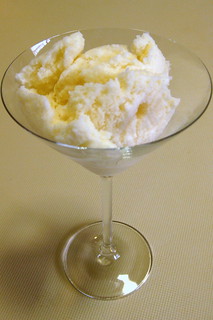
If it was me, I’d be crowing it from the rooftops, but Bernardo Buontalenti’s Wikipedia page is strangely silent on the fact that he invented ice-cream. This may have something to do with being dead for several centuries, and hence he’s not around to fix it. However, if you do a Google search for him, you will uncover information like…

Bernardo Buontalenti (Florence, 1531-Florence 1608) was a Florentine stage designer, architect, theatrical designer, military engineer and artist. …  Besides that, he is also traditionally considered the inventor of modern gelato. The Grand Duke Cosimo I de’Medici wanted him to organize an opulent banquet to celebrate the Spanish deputation, that had to stand open-mouthed in front of so much splendour. Buontalenti invented a new dessert for the occasion: a sorbet made with ice, salt (to lower the temperature), lemon, sugar, egg, honey, milk and a drop of wine.

– Fantastic Florence

This may not be completely historically accurate, and other Italians also appear to have a claim to being the inventors, or perhaps even some Americans deserve the credit. However, it’s intriguing to think that before the 16th century, no-one had combined the ingredients of milk, egg, honey and ice in the appropriate way to create this dessert, despite those ingredients being available for thousands of years.

However, three things happened recently that have led me to a renewed interest in this. Firstly, our freezer died and has been replaced with a much larger one. Secondly, our beaters died and were replaced with a mix-master that came with an ice-cream maker bowl. Thirdly, summer arrived!

I have tried to find a recipe that matches the original ice-cream (gelato) recipe, but it appears to be a closely-guarded secret. However, I did come across one recipe for “Buontalenti” ice cream that has turned out very well, and importantly, doesn’t have silly instructions like checking if things coat the back of a wooden spoon. Here’s my Australian conversion of it:

Ingredients

  • 4 large eggs
  • 2 cups (500mL) full-cream milk
  • 180mL caster sugar
  • 3/4 cup (187mL) thickened cream (eg. 35% milk fat)
  • 1/2 teaspoon (2.5mL) liquor for flavouring – in my case I used Grand Marnier but it’s apparently more traditional to use Disaronno Amaretto

Method

  1. Separate the eggs, and place the yolks into a mixing bowl.
  2. Add half the sugar to the bowl, and whisk for a couple of minutes until thick and slightly pale in colour.
  3. Fill the sink with cold water, add some ice-cubes, and place a large, metal mixing bowl in there with a sieve on top. This will come in handy later.
  4. Place the remaining sugar along with the milk into the medium-sized saucepan and heat, stirring regularly, until the sugar has dissolved and the milk is just about to simmer.
  5. Remove the saucepan and pour it slowly into the egg-and-sugar mixture, whisking all the while.
  6. Then pour the mixture back into the saucepan and place over a moderately-low heat, stirring continually, until the temperature reaches 75 degrees Celcius. The mixture should have thickened slightly, becoming a thin custard.
  7. Remove the saucepan and pour the custard into the chilled bowl, through the sieve. Let it cool for a little while, then place in the fridge until completely chilled.
  8. Mix in the cream and liquor.
  9. Process in an ice-cream maker until it forms the consistency of soft ice-cream and increases in volume. Store in the freezer for at least a couple of hours before serving.

Makes about 1.5L of gelato.

No More Winner Takes All

Over the last year, I’ve been in a number of discussions where the concept of Winner Takes All was raised, and it’s now starting to annoy me. In a Winner Takes All market, there is a dominant competitor who takes a very large share of the profits. An example at the moment is the mobile phone manufacturing market, where it seems Apple is the winner who is taking all (or, at least, most). However, there may be a widespread view that any market relating to the Internet is Winner Takes All, and that would be a problem.

Winner Takes All is typically put forward to justify either betting big (eg. intentionally making multi-year losses in order to get the scale of users/customers needed to be dominant in a market) or not doing anything (eg. because only one can win anything, and the likelihood is that it won’t be you). In other words, Winner Takes All markets are for only the bravest of the brave. But if anything relating to the Internet is Winner Takes All, then unless you’re pretty special, you should stay off the Internet. Or so the thinking goes.

You might expect that I disagree – and you’d be right. Let me break down why.

Firstly, there are mature businesses on the Internet that have multiple big players, and yet not a single winner. Web mail is a good example, with the biggest services (from Microsoft, Yahoo and Google) having similar sized user-bases.

Global Web Mail Unique Visits (ComScore May 2012)
Service Users
Microsoft Hotmail 325 million
Yahoo Mail 298 million
Google GMail 289 million

And while one counter-example is enough to disprove a hypothesis, here’s another one to show the first wasn’t merely an exception. Desktop web browser share is largely split between three big players (Microsoft, Mozilla and Google). Another one is Internet-connected game consoles. I’d say this myth is busted.

A response to the above is granting that not every market relating to the Internet is applicable to Winner Takes All, but that there are some important ones that are. For example, Internet services with “network effects” (those where the more users that adopt it, the more value they are to those users) are in such a market, and Facebook’s dominance in social networking illustrates this.

While this watered-down Winner Takes All view appears more reasonable, there are two lines of evidence that discount it also. The first is the historical record of all the previous social networking services where it appeared there was a winner, but then they lost to a subsequent service that rapidly took over. Back in 2007, MySpace was considered dominant over Facebook, and before MySpace were other services like GeoCities which, according to Wikipedia, in 1999 was the third most visited site on the Internet. If a winner can be displaced so quickly, can they really be said to have “won”?

The second line of evidence is the active competition still occurring in the social networking market. There are both alternative services such as Twitter, LinkedIn and Yammer, and also similar services operating in specific (yet still sizeable) markets such as Qzone, Renren or Sina Weibo in the Chinese language market. If a service isn’t dominant everywhere, can they really be said to have taken it “all”?

But wait, I hear someone say. Cyworld was dominant in the South Korea language market, and yet now Facebook has displaced Cyworld over the course of a year. Doesn’t this show that the same could happen in China and Facebook is operating in a Winner Takes All market? Well, yes it could happen in China, but no, all this shows is that Facebook is a good competitor. There’s no need to explain away Facebook’s appeal through claiming their rise in South Korea was an inevitable consequence of the market structure.

So, I don’t find Winner Takes All convincing, but the danger is that some people believe it and choose not to attempt to launch valuable Internet-based ideas. We users of the Internet would end up deprived of those services as a result. But, it seems the good news is that plenty of people do not believe in the pessimistic world view of Winner Takes All and are happily putting their products and services on the Internet.

Book Review – Good to Great

I’d been aware of this book for a while, but it still seems to be available only in expensive hardback format, so I was waiting until it got cheaper. Recently I found it for $15 (still hardback) and this was enough for me to give it a go.

Good to Great

Research-based guidance for established companies to excel in their markets.

I came to this book by Jim Collins with some interest in reading about a new research-based attempt to find a winning corporate formula, but also scepticism due to the unsuccessful attempts that have come before. Perhaps the most infamous was In Search of Excellence which purported to find the recipe for excellence, but gave Atari (had to sell key assets in 1984) and Wang Labs (filed for bankruptcy in 1992) as examples of excellent corporations. Although, that book identified 43 “excellent” companies, so it’s probably not too bad for only a couple of bad apples to end up in their list.

Collins improves his odds by identifying only 11 “good to great” companies. But this is perhaps an uncharitable comparison, as his team appears to have done an extensive job in analysing these companies, and there are only 11 because only 11 companies out of the 1,435 US-based “Fortune 500” companies from 1965-1995 met their criteria. Then to identify the features that relate to being “good to great”, these had to be possessed by all “good to great” companies and lacked by all 17 close-but-not-quite-good-to-great companies also identified by the team.

The book explains the basis for these features, and is engaging and well-written. For me, the most surprising was the feature of “first who.. then what” which is basically the idea that hiring well becomes foundation for all corporate strategy, and not, say an analysis of competitors, technology, financials, or other market fundamentals. I do like this idea, despite its fuzziness, as it says that people aren’t fungible and that they can make a big difference. There are five other features, making six in all, but none were as counter-intuitive as this one. In any case, I will now be paying attention to these features in my workplace and future employers.

However, I can’t bring myself to adopt them as fundamental tenets since despite the rigorous research, the conclusions remain essentially unproven. From my point of view, there are three weaknesses in the research: the set of “good to great” companies is arbitrary, the set is small, and the conclusions are untested.

Taking the first problem, “good to great” companies were defined as having a transition to “great” performance of at least three times the general market (from a point of transition). If, instead of three times, it had been five times or even two times, a different set of companies would’ve been found. Since the features needed to be possessed by all “good to great” companies, a different set would’ve produced a different set of features, e.g. potentially larger or smaller. Hence, perhaps the features found are sufficient for a good-to-great transition but some weren’t actually necessary.

The problem of a small sample is tackled in the book, referencing “two leading professors” who think the sample of 11 companies wasn’t small. Unfortunately, this is not convincing. For example, one professor says that the 11 companies wasn’t a sample as it was 100% of companies that met the criteria – although I would respond that the book promises that these principles are universal, so there will be more such companies in the US-market in the future, and they should also apply to non-US-based companies, hence the 11 companies don’t represent 100% of all possible “good to great” companies.

Lastly, the conclusions are untested. The research team could’ve, say, looked for a couple of companies outside the US that met their “good to great” criteria and then checked that those companies possessed all of the six features. Except they didn’t. The only companies examined as part of the study were those that informed the conclusion. The use of comparison companies gives me a level of faith in the conclusions, but these can’t be validly re-used in testing that conclusion. So, really the conclusion remains a hypothesis for now.

My grumblings notwithstanding, I was impressed with the analysis in the book and the methodology that used comparison companies to filter out features that were shared by both the “good to great” companies and also those that didn’t perform so well. It has shifted my thinking about what a successful business can look like.

Rating by andrew: 3.5 stars
***1/2

Cheaper than treadmills at the gym

I’m unlike 99% of other Melbourne residents because I’ve used the city’s bike share scheme. In fact, I’ve used it four times now, and I’m a happy customer.

The scheme’s mission is to establish an alternative transport system to things like taxis and trams, but it hasn’t exactly been a raging success. A recent article in The New York Times on bike sharing reported that the Melbourne Bike Share gets about 150 rides a day, and since the scheme offers 600 bikes, at least 75% remain stationary on a given day. That article blames Australia’s helmet laws, but I think bike sharing just hasn’t found the killer application yet.

I don’t use Melbourne Bike Share for transport reasons – I use it for exercise. Instead of paying, say, $19 / week to go to the gym and use a treadmill, I jump on a bike for $2.60 a session, whenever I want. There is an additional cost for a helmet, but that’s just $5 from the nearby 7-Eleven convenience store, so hardly counts in the scheme of things. The whole arrangement seems to be fantastic value.

However, when I’ve been out riding at lunchtime, I haven’t seen another soul using Bike Share bikes. The idea of using them for casual exercise doesn’t seem to have caught on yet. I’m thinking it’ll be like boot-camps in the parks – suddenly all the exercise junkies will realise the value of this public resource and it will be difficult to get in for normal uses.

I know that no-one reads my blog, so I’m not worried about tipping off the world, and hence preventing my own use of the bikes. This is more establishing the evidence of my own use now, so later I can prove that I was in front of this trend. Yes, it’s all about me.

But in case someone is reading this, I thought I’d share some other observations.

Firstly, the 30 min “free” trip length that you get with a $2.60 day pass is not really enough for a good exercise, since down-hill and flat roads plus traffic lights mean I get, at best, two-thirds of the time doing productive up-hill riding. Also, half the time I’ve been a couple of minutes late, meaning I’ve been charged an extra $2 as a result. So, I’m thinking of paying the $52 for an annual pass, which gives you 45 min “free”  trips. (I note that the corporate plan at $100 provides for 60 min “free” trips along with the ability to share it between people, so this option may be better still.) In theory, you could also plan an exercise route that took you past multiple bike stations, where you could swap your bike, starting the clock again.

There are some annoying glitches in the set-up that suggest to me hardly anyone uses this, or they would’ve gotten fixed. For instance, I found when I reached a bike station for the first time that the helmet I got from 7-Eleven had packaging that needs scissors to remove. Also it turned out I’d gotten the wrong size helmet and had to exchange it. The instructions at the bike station terminal when you enter your credit card for a day pass has the message “insert card” on the screen when in fact you need to remove the card to continue. You need to accept a long legal agreement (80 screens at seven lines per screen) each time you rent the bike. My bike code print-out has gotten stuck inside the machine, and I’ve needed to get it to print me another receipt in order to push it out. As a result, people who plan to use the Bike Share just the once, like tourists, may find this all too hard.

As someone who hasn’t owned a bike for something like 20 years, the irony isn’t lost on me that I’m enthusing about bike riding, but as I’ve given the Melbourne Bike Share a go over the last couple of weeks, I’ve come to appreciate it. Melbourne has some rather pretty streets and paths, and my experience riding around in the scenic outdoors sure beats the time I spent pounding on treadmills.

Coconut Ice Recipe

My first memories of Coconut Ice are from my primary school years, where one of our school holiday babysitters made it one day. Despite the childhood associations and, of course the fact it contains sugar, I was never particularly fond of this confection as it contains that most dreaded of ingredients – copha. The fatty residue that copha leaves on my tongue renders any otherwise tasty treat sadly into a nasty treat.

However, in digging around for recipes for the upcoming Carribean dinner at our recipe club, I’ve come across a recipe for Coconut Ice that doesn’t contain copha, and actually matches the description on the tin – it is a  frozen coconut dessert. That said, it does taste a lot like the other Coconut Ice  so it has the added bonus of having childhood associations, too, just without the copha.

I’ve made this twice now, and it is quick and straightforward. The icing on the cake is that it doesn’t require an icecream maker, so I can theoretically decide to make it in a morning and then eat it in the evening, which will be great coming into summer!

The original recipe is from the Island Flave website.

Ingredients

  • 200g dessicated coconut
  • 200mL warm water
  • 1 cup caster sugar
  • pinch of cream of tatar
  • 2 cups (500mL) full cream milk
  • almond essence
  • 1 egg (but really we just want the yolk)

Method

  1. Mix the coconut with the water in a small bowl to rehydrate it. Pack it down and then cover with cling film. Set it aside for at least 10mins.
  2. When coconut is rehydrated, separate it using a fork, then scoop out 1 cup (250mL) of the coconut and place it in a large mixing bowl with the sugar and cream of tatar.
  3. Put the remaining coconut into a fine sieve, pack it down, and place the sieve over the mixing bowl.
  4. Heat the milk in a saucepan, without stirring, until the milk is about to boil.
  5. While the milk is heating, separate the yolk from an egg, and place in a small container. Beat the yolk until it is runny.
  6. When the milk is ready, remove from the heat, remove any film from the top, then gently pour it through the sieve. Press down on the coconut with the back of a spoon to squeeze all the milk through. Discard the coconut from the sieve as it is now pretty tasteless.
  7. Stir the mixture until the sugar is dissolved. Mix in the egg yolk and a few drops of almond essence (no more than 1/4 teaspoon or it will taste very almondy).
  8. Pour the mix into a 1L container and place in the freezer for a few hours or overnight.
  9. While in the freezer, the mix will separate and the top will go hard. So, at least a couple of hours before serving, remove the mix from the container, break into chunks, and blend well with a stick mixer or blender, before returning to the freezer.

Where To For Our Olympics

Now the Games of the XXX Olympiad (that’s London 2012 Olympics for us mere mortals) have come to a close, there will be much hand-wringing, soul-searching and other colourful metaphors used within the offices of the Australian Olympic Committee. The AOC forecast fifteen Gold Medals for Australia at this Olympics, not quite the seven we actually received, and at times we ranked on the Gold Medal Tally behind well-known Olympic super-powers like Cuba and New Zealand (g’day neighbours!). This is not to say that our athletes didn’t perform well, that it’s only about bringing home The Gold, or that I could somehow qualify for more than sweat-wiping duty of athletes at the games. However, the AOC is all about exchanging cash for gold and they will now be looking for more cash given that there will be a demand for more gold.

In some ways, it’s an Australian success story. The Australian Institute of Sport was established in 1980, four years after our zero-gold result at the Montreal Olympics. In the years that followed, Australia averaged more than nine gold per Summer games (including London 2012). What is sometimes overlooked is that this has been a scientific triumph as much as a sporting one. While it is the athletes standing on the podium receiving the medals for all to see, it would be justified to also see up there the army of sports scientists and specialists in sports medicine standing there that Australia has willed into being to create our international success. It is probably the Australian scientific organisation with the most influence on the international scene in recent years, but it’s disguised as sport to keep the masses happy. Thanks to the AIS, a country of around 20 million people was able to rank fourth at the Olympics as recently as 2004.

But eventually the limitations of our population size and ability to fund elite sport was going to catch up with us. We had a temporary advantage due to the skills and knowledge in the AIS and the system around it, but information wants to be free. Australian coaches, scientists and even athletes are now helping out other nations. Even Australia’s first individual gold medalist at the London 2012 games, Tom Slingsby, wasted little time after the games to head to the US to help the team defend their America’s Cup title. This is not a slight on the patriotism of those individuals, but recognition that information advantages last for only so long. We now need to find another approach to win a disproportionate share of the Olympic gold.

Our new competitive advantage could be our women. While women made up 46% of the Australian team, wins in their sports accounted for 57% of our Olympic medals (note also that only 46% of the opportunities for a medal are eligible to women). Our first gold medal of these games was from women, and it stood as the only one for nine days. However, while wins in women’s events were responsible for 57% of the medals, they were responsible for only 43% of the gold. Something is not quite right.

Even before the games started, there was some contention that Australia’s female athletes were treated differently from the male athletes. Media reports revealed our women’s basketball team flew to London in economy class while the men’s team flew business. This may be just be the rumblings of a couple of disgruntled athletes, but let’s see if there are some stats that could shine some light on a systemic difference between the men’s and women’s performance at the games.

Despite winning more medals, our team’s women’s medals converted to gold less often than the men’s medals in London. Just 15% of the women’s medals were gold, while 27% of the men’s medals were gold. This difference of 12% between their ability to convert medals to gold, despite coming from the same country, being selected by the same process, and being supported by the same institutions, turns out to be pretty poor compared with other nations. The following table compares all countries who won at least a dozen medals (just so we can have some level of statistical validity):

Rank Country Womens Gold Mens Gold Womens Medals Mens Medals Womens Conversion Mens Conversion Delta
1 BLR 1 2 9 4 11% 50% 39%
2 IRI 0 4 0 12 0% 33% 33%
3 JAM 1 3 5 7 20% 43% 23%
4 UKR 2 4 10 10 20% 40% 20%
5 AUS 3 4 20 15 15% 27% 12%
6 FRA 4 7 15 19 27% 37% 10%
7 CHN 21 18 52 38 40% 47% 7%
8 GER 4 9 17 31 24% 29% 6%
9 RUS 12 12 44 38 27% 32% 4%
10 CUB 1 4 3 11 33% 36% 3%
11 ESP 2 1 11 6 18% 17% -2%
12 GBR 12 20 26 45 46% 44% -2%
13 NED 4 2 15 9 27% 22% -4%
14 HUN 3 5 6 11 50% 45% -5%
15 JPN 4 3 17 21 24% 14% -9%
16 CAN 1 0 9 9 11% 0% -11%
17 USA 29 17 59 46 49% 37% -12%
18 NZL 3 3 6 8 50% 38% -13%
19 ITA 3 5 8 20 38% 25% -13%
20 KAZ 4 3 6 7 67% 43% -24%
21 BRA 2 1 6 11 33% 9% -24%
22 KOR 5 8 7 21 71% 38% -33%

Australia comes 5th worst, out of 22 countries, right behind Belarus, Iran, Jamaica and Ukraine. Not exactly the company we’d chose to validate our support for women athletes.

If Australia had lifted women’s events conversion to parity with men’s events, we would’ve gotten another two gold on top of our other seven, and we would’ve ranked eighth rather than tenth. So, if the AOC is looking for somewhere to spend to increase our performance in the face of the declining benefits of our leading science, I suggest ploughing money into women’s sport.

NB. For the purposes of the above analysis, I’ve looked at whether sports events are male-only events (like Men’s Marathon), female-only events (like Rhythmic Gynamistics) or support both (like Equestrian or Mixed Doubles in Tennis). When determining if an event is a women’s event, I’ve included the two latter categories, and similarly men’s events include the first and last category.

For those that are interested, my analysis spreadsheet is also available. A more thorough analysis would look at previous summer and winter Olympics to see if this was just a one-off, but I leave that as an exercise for the interested reader.

Movie Review – Date Night

As a married couple with kids, we are familiar with the concept of date nights. Setting aside time where we do something nice together is a good idea. And since we’re Tina Fey fans, it seemed only natural for our date night the other week to involve watching Date Night. Yeah, I know it’s hardly original, but it seemed apt.

Date Night

If you know the subject, you’ll know the truth of the material

It’s got Tina Fey and Steve Carrell, both skilled in the art of ad-libbing and quirky comedy. They’re playing a married couple with precious little time left in their lives for each other, shocked at the deteriorating relationships of some close friends, and looking to add some spark again. And then they get a lot more spark than they bargained for, with mad-cap capers ensuring.

I found the whole thing to be enormous fun. The plot and action sequences are not particularly strong elements of the film, but the two lead protagonists are wonderful characters and the dialogue (both written and ad-libbed) is funny. It’s funny because it’s true.

Rating by andrew: 4.0 stars
****

The three ingredients of an idea

Legend tells us…

A young Isaac Newton was sitting quietly in his garden when an errant apple fell from a tree above, striking his head. Shocked (and presumably a bit sore), Newton found that he also found himself in possession of the idea of the Universal Law of Gravitation. This law was that any two objects feel a gravitational force towards each other related to their masses and the distance of separation, presumably explaining why the apple hit his head as hard as it did.

Unfortunately, the bit about being struck on the head is fabricated, but the rest of the story is basically true. (And here in Melbourne, there’s an apple tree grown from a cutting taken from Newton’s tree, which I think is pretty cool.) Still, in this story I find the three basic ingredients that I’ve also always found whenever I’ve had a good idea: (1) deep knowledge of a domain, (2) a reflective state of mind, and (3) a trigger.

Ideas may also be called discoveries or inventions, but all are open to being tackled with this same process. Essentially, it is about finding a solution to a known problem.

Deep Knowledge of a Domain

The first part of having deep knowledge is having a grip on what that problem is, but it is also important to know why previous solutions didn’t work. According to Wikipedia’s article on benzene, German chemist Kekule  had the idea that the benzene molecule is arranged in a ring after “years of studying the nature of carbon-carbon bonds” and was a thought-leader in the field, having solved previous carbon bonding questions earlier.

While cramming is generally considered to be a poor study technique, I’ve found it consistently very helpful in exams. One benefit for me is that going into an exam with a deep background in the topic allows me to adapt to the questions on the fly and occasionally come up with a cunning answer.

Reflective State of Mind

The next ingredient is being in the right mental state for the idea to occur. For me, it could be in the shower, at the train stop, or even just before nodding off. In general, I am not doing anything mentally demanding, but waiting for something to happen.

The archetypal example here is that of Archimedes, who realised how to measure the volume of an irregular shape – a crown – when he was relaxing in a bath. In his excitement, he ran from the bath naked, shouting “Eureka!”

This sort of relaxing-in-the-tub, contemplative state is typically not what is produced in a traditional brainstorming workshop, with participants encouraged to shout out ideas as they occur to them. Or, for that matter, in answering a problem-solving question in a job interview. That said, a reflective state of mind doesn’t need to be a meditative state of mind.

I’ve found that in practice, a reflective state of mind can be assumed at will. Perhaps I get practice at this as part of my job, but in most conversations that I have with people, I am looking out for something surprising that doesn’t fit my mental model of the world. I am always looking to be pleasantly disrupted.

A Trigger

I sat on this post for several weeks because I’d initially written this part as “an external trigger” but it wasn’t sitting right with me. External triggers are the stuff of inspiration legend, something external to the problem domain that triggers thinking in the right direction. But another type of trigger is important too.

I don’t mean chocolate, although I do find this very helpful. I’m thinking of thoughts triggered through the application of methodical process, a problem-solving technique, or creative framing/structuring of the problem. These approaches tend to be learned over time, and most people probably have several trusty ones in their problem-solving kit bag. I don’t remember being taught these things formally, but I have adopted some that I liked from seeing their use by experienced people in a field. I’ll call these process triggers, for want of a name, and they can be replicated and re-used. Recently, I used a scenario planning approach to identify an idea for a new service at work.

Compared with process triggers, it is probably impossible to replicate successful external triggers. In the previous examples, it was Newton’s apple falling, Kekule thinking of the symbol of a snake biting its tail (hence the ring of benzene), or Archimedes overflow of bath water. Other people grappling with other problems would likely not find these helpful at all.

However, both types of triggers overcome a problem inherent in having deep domain knowledge – that of being locked within the universe of previous thinking on a topic. A example of an everyday trigger for me was recently when I was listening to a radio interview of someone explaining the evolution of printed media. I was previously trying to identify an appropriate analogy for the evolution of telephony, and wanted something that would go beyond a VoIP story. As the interview progressed, I suddenly realised that the story of print is what I needed.

So…

The ingredients needed to come up with ideas are developing deep domain knowledge, adopting a reflective mental state, and finding a good trigger. Perhaps there’s nothing earth-shattering here, but I’ve found it useful to write it out and convince myself that this makes sense.

While the ingredients are identified here, the trigger may very well not be under personal control, and there may be no useful idea to add to a domain, so it’s not likely to form the basis for a scientifically testable hypothesis. Doing some more work to find ways  to maximise the chance of an external trigger occurring would be valuable, though. Until then, I’ll just have to rely on chocolate.